
7 min read
Who Pays for Tenant Improvements? Landlord vs. Tenant, Line by Line
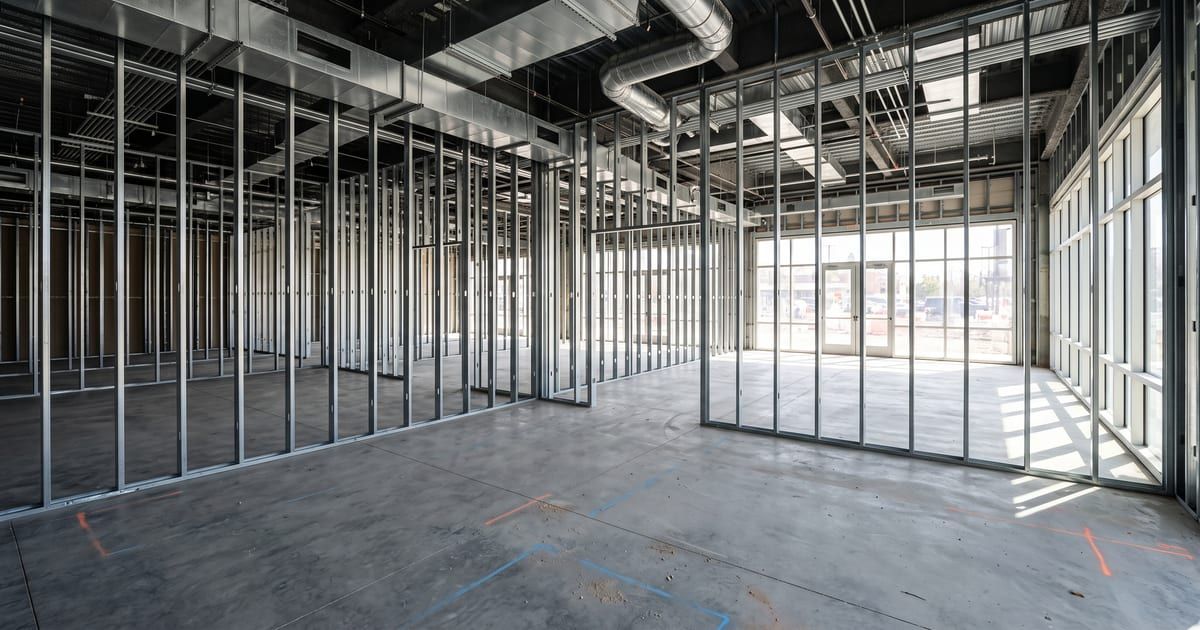
Who pays for tenant improvements depends on what the signed lease says, not on a default rule. In most commercial leases, the landlord contributes a tenant improvement allowance (TIA) toward base building and standard finishes, and the tenant pays for anything above that — upgraded finishes, specialty equipment, data cabling, signage and often permits. Turnkey deals shift more to the landlord but limit tenant choice. The split is negotiable up to lease signing, and almost never after.
Who Pays for Tenant Improvements in a Typical Commercial Lease
In a standard office, retail or restaurant lease, the landlord owns the building shell and wants it leased; the tenant wants a space that fits their operation. The lease is where those two interests get reconciled, line by line. The most common structure is a tenant improvement allowance: the landlord commits a fixed dollar amount per square foot toward the build-out, and the tenant covers everything beyond that number.
What the landlord usually pays for falls into base building work — structural elements, the roof, exterior walls, the main HVAC trunk lines, core restrooms, fire sprinkler mains and the electrical service to the panel. What the tenant usually pays for is everything that makes the space usable for their specific business — interior partitions, finishes, lighting layout, specialty plumbing for a kitchen or lab, supplemental HVAC, low-voltage cabling, security, millwork and signage.
The grey area in the middle is where leases get fought over. ADA path-of-travel upgrades triggered by the build-out, Title 24 energy compliance work, demolition of a prior tenant’s improvements, grease interceptor installation, electrical service upsizing — any of these can land on either party depending on how the clauses are written. Who pays for permits, plan check fees and the architect’s drawings is also a lease question, not a construction question. If you want a plain-language overview of the work itself before you negotiate, our tenant improvements page walks through what a build-out typically includes.
Landlord Tenant Improvement Responsibilities, Written Into the Lease
Landlord tenant improvement responsibilities are usually spelled out in a work letter attached to the lease. The work letter is the exhibit that actually controls the build-out: it defines base building condition, lists what the landlord delivers, sets the allowance amount, states how and when the allowance is paid, and names who holds the construction contract.
Two delivery conditions dominate. “As-is” means the tenant takes the space in whatever state the prior tenant left it, including old partitions, abandoned cabling and dated finishes. “Warm shell” or “vanilla shell” means the landlord delivers a cleaned-up space with specific items in place — a demised box, a dropped ceiling grid, HVAC distribution to a point, lighting at a certain level, restrooms built, demising walls finished. The difference between those two conditions can be a large portion of the total build-out scope.
Allowance payment mechanics matter as much as the number. Some landlords reimburse the tenant after completion against paid invoices and lien releases. Others pay the general contractor directly on monthly draws. Some require a certificate of occupancy, final inspections and a signed estoppel before any funds release. Each structure changes how the tenant finances the gap. We are not your attorney or your broker — those professionals interpret the lease — but as the builder, we can tell you what each clause will mean on site. If the work includes exterior changes, parking, utilities or grading, site development is often a separate scope with its own cost responsibility clause.
Tenant Improvement Allowance Negotiation: What’s Actually on the Table
Tenant improvement allowance negotiation is not just about the dollar number. The structure of the allowance often decides whether the project pencils. Four levers come up on nearly every deal.
First, the allowance amount itself, usually stated per rentable square foot. The market rate shifts with vacancy, lease length and tenant credit. Longer leases and stronger tenants pull higher allowances. Second, what the allowance can be spent on. A “hard costs only” allowance pays construction labor and materials but excludes architect fees, permits, FF&E, cabling, security and signage. A broader allowance that covers soft costs stretches further for the tenant. Third, unused allowance treatment — can the tenant apply leftover dollars to rent, moving costs or furniture, or does it revert to the landlord. Fourth, timing: how soon after lease execution does the clock start, and how long does the tenant have to spend the money.
Free rent, moving allowances and signage rights often get traded against the TIA. A tenant giving up two months of free rent might negotiate a higher allowance; a landlord protecting the per-square-foot allowance number for the rent roll might offer rent abatement instead. Change orders during construction almost always come out of the tenant’s pocket regardless of the allowance size — our write-up on change orders and who pays for them explains why. Before you commit to a number, get a contractor to walk the space and flag the cost drivers your broker will not see — the condition of the existing HVAC, the panel capacity, the slab, the path-of-travel to restrooms.
Turnkey vs Allowance Build-Out: Two Very Different Deals
Turnkey vs allowance build-out is a fundamental choice. In a turnkey deal, the landlord agrees to deliver the space finished to an agreed scope and drawings, at the landlord’s cost, with no allowance paid to the tenant. The tenant signs the lease, the landlord builds, and the tenant moves in on a stated date. In an allowance deal, the tenant controls the construction contract and spends the allowance against invoices.
Turnkey sounds simpler because the tenant writes no construction checks. The trade-offs are real. The landlord picks the contractor, picks the subcontractors, controls finish selections within a spec, and has every incentive to build to the drawings and not a dollar beyond. Change requests mid-build become expensive or get refused. Schedule slippage is the landlord’s problem on paper but the tenant’s problem in practice when opening day moves. Specialty tenants — restaurants, medical, light industrial, labs — rarely do well on turnkey because the landlord’s standard subs are not set up for the specialty work.
Allowance deals give the tenant control: pick the general contractor, pick the finishes, approve the subs, manage the schedule. The tenant also carries the risk of overruns, change orders and coordination. For most restaurant and retail build-outs we see, tenants choose the allowance route and hire a contractor who has done that use type before — see our restaurant build-out and retail build-out pages for what those scopes actually involve. Which structure is cheaper is deal-specific; which gives you the space you need is usually not close.
Local Realities in Northern California: Permits, Prevailing Wage, Title 24
Tenant improvements in Tracy, Stockton, Modesto, Livermore, Pleasanton, San Jose, Oakland, San Francisco and the surrounding cities run through local building departments with their own plan check queues and inspection calendars. The City of Tracy, City of Stockton and other jurisdictions each publish their own submittal requirements and fee schedules. Who pays those fees — tenant or landlord — is a lease question, but the schedule impact lands on the tenant either way, because the tenant is the one trying to open.
Three California-specific items change the math. Title 24 energy code triggers on nearly every build-out that touches lighting, HVAC or envelope — the California Energy Commission publishes the current standards and compliance paths. ADA path-of-travel upgrades can be triggered by the scope of work and the valuation; the determination is made by the plan checker and the building official, not by the contractor. And if the building owner is a public agency or the project is publicly funded, prevailing wage rules under the California Department of Industrial Relations apply to the trades on site. We take prevailing-wage projects; we are not a union shop.
As a licensed California commercial general contractor (CSLB #798732), we handle permit coordination, Title 24 compliance documentation and inspection scheduling as part of the build. The code determinations themselves belong to the building department, the design professional of record and, when questions are legal, your attorney. If you want a sense of the full workflow, our page on commercial general contracting covers how a project moves from drawings to turnover.
If you have a lease on the table and want a contractor’s read on the scope before you sign, request a free written estimate at /quote or call (925) 915-1606. We serve roughly a 90-minute radius of Tracy and will tell you what the lease language is going to cost to actually build.